
Reviving Lost Voices
How Technology and Linguistics Bridge the Past and Present”

The Power of Text Analysis and the Spoken Word
Our understanding of history has long been shaped by what we see and read—paintings, written accounts, and the artifacts left behind. Yet the voices of history, the sounds that once filled the air, have remained maddeningly out of reach. What if we could break this silence? What if we could hear the voices of the past—not just words on a page but the cadence, inflection, and texture of speech as it was originally spoken? Thanks to advancements in artificial intelligence, this is no longer a dream—it's a reality we're beginning to unlock.
But before we delve into how AI is reshaping our understanding of the past, let me share a personal story about the power of text analysis to illuminate the spoken word. As an actor, I spent a year learning the International Phonetic Alphabet (IPA), a system of symbols that represents the sounds of spoken language. This was more than an academic exercise—it was a revelation. IPA isn't just a tool for linguists or actors; it's a bridge that connects written words to their spoken counterparts, unlocking layers of meaning hidden within the text.
A Journey of Discovery
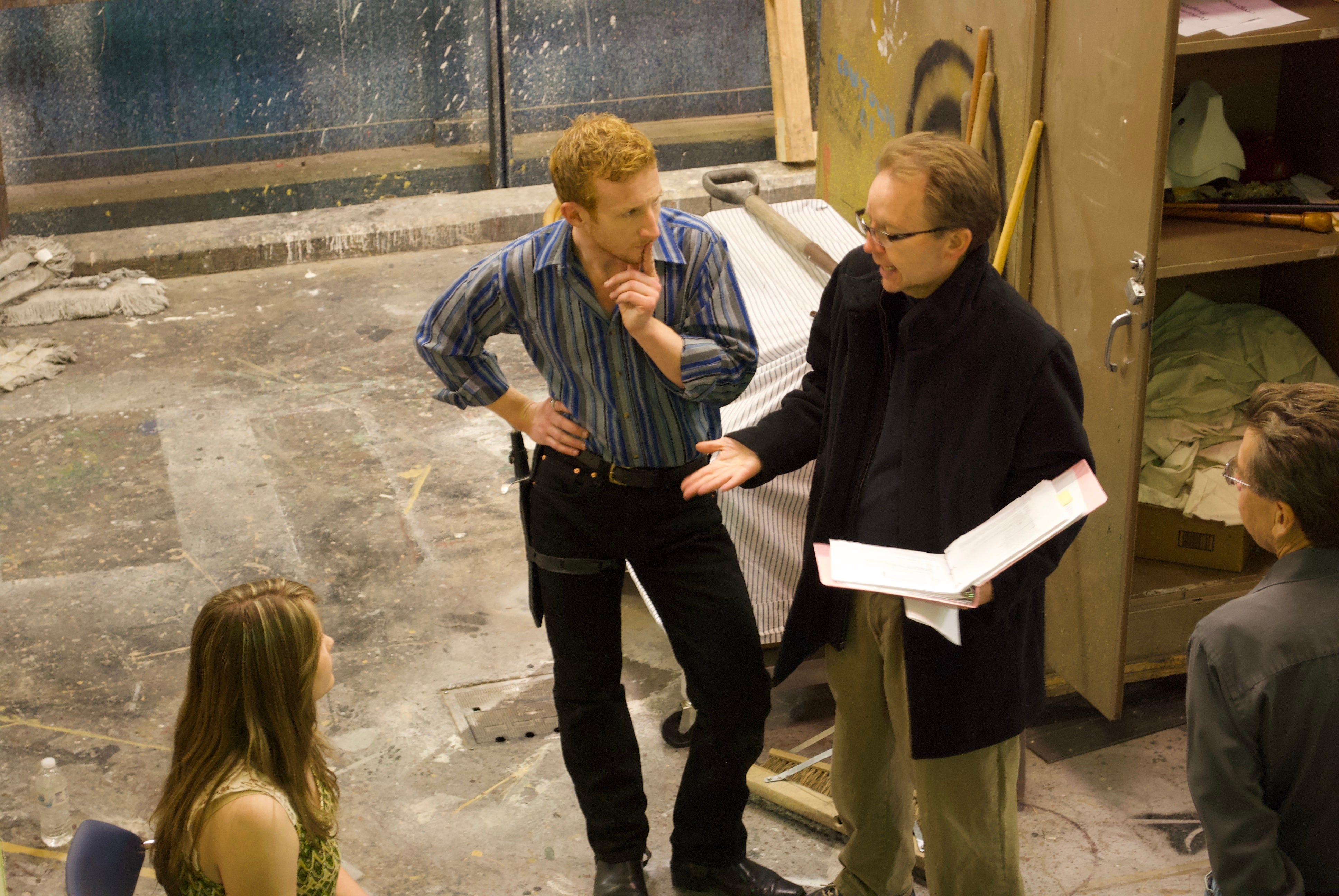
Under the mentorship of Rob Gander at the University of Nevada, Reno, I had the extraordinary opportunity to work with Ben Crystal—actor, scholar, and son of renowned linguist David Crystal—and Eric Rasmussen, a distinguished Shakespearean scholar whose work has earned him the nickname "the Robert Langdon of the Shakespearean world" from the Washington Post. Rasmussen, whose authentication of a newly discovered Shakespeare First Folio made international headlines, brought unprecedented depth to our exploration of Original Pronunciation (OP).
The culmination of this work was truly historic: the world premiere of Hamlet in Original Pronunciation at UNR. This wasn't just another Shakespeare production—it was only the fifth OP production in modern times, following two at London's Globe Theatre, one at the University of Kansas, and one at Cambridge in the 1950s. The production came at a pivotal moment for the UNR theatre department, which had just survived a threatened elimination. Under Gander's leadership, and with Rasmussen's scholarly guidance, the department transformed this challenge into triumph.
Ben Crystal, who played Hamlet, guided our cast through rigorous exercises, including "Passion in Practice," while his father David Crystal, The Globe's consultant and author of "Pronouncing Shakespeare," provided invaluable recordings in OP. These resources revealed how pronunciation shapes meaning, making the text's poetic qualities resonate with profound clarity. Modern audiences were delighted to discover that words that no longer rhyme in contemporary English—like "love/prove" and "eyes/qualities"—suddenly aligned in OP, unveiling Shakespeare's original wordplay.
Bridging Orthography and Phonology
The development of BORT—a Mixed Orthographic/Phonemic Language Model—builds directly on these principles of rigorous text analysis. BORT was designed to process both standard orthography (written text) and IPA, bridging the gap between how we write and how we speak. This dual capability enables it to analyze the evolution of language, revealing how pronunciation, rhythm, and tone have shifted over centuries.
Orthography refers to the conventional spelling system of a language—essentially how we write words. When paired with phonology (the study of speech sounds), it creates a powerful framework for understanding the complexities of language. This combination underpins BORT’s innovative approach.
What makes BORT revolutionary is its ability to tackle challenges other large language models (LLMs) can’t. Most LLMs are restricted to written text, struggling to handle phonetic representations like IPA. BORT, however, is pre-trained on tasks such as converting IPA representations back into standard orthography—essentially translating the sound of a word into its written form. This “pronunciation transform” allows the model to reconstruct the nuances of spoken language with remarkable accuracy. By integrating phonetic data into its understanding of text, BORT exemplifies how traditional text analysis can evolve to meet modern challenges.
Connecting the Past to the Present
The potential of models like BORT isn’t limited to historical linguistics. In the field of speech-language pathology, BORT is being fine-tuned to help diagnose and treat speech disorders like aphasia, where patients struggle with speech errors. By processing both the sounds of speech (phonology) and the meanings of words (semantics), BORT enables clinicians to better understand and address these challenges.
For someone like me, who has spent years grappling with the relationship between text and sound, this is deeply significant. When I studied IPA, I saw firsthand how phonetic understanding could enrich an actor’s performance. Similarly, during my time at HumanFirst—a clinical research company dedicated to democratizing health data through wearable consumer devices and AI—we tackled big challenges with novel approaches. By leveraging dynamic instruments like Apple Watches and Fitbits, we uncovered critical insights to address pressing healthcare needs. Now, I see how tools rooted in both linguistic and technological innovation can empower clinicians to restore voices silenced by disorder. It’s a powerful reminder that the principles of dramaturgical text analysis—attention to detail, contextual sensitivity, and openness to discovery—can have applications far beyond the stage.
The Future of Performance
As an actor, I can’t help but marvel at what BORT and similar technologies mean for the performing arts. Imagine an actor delivering Shakespearean lines with a reconstructed Elizabethan accent, guided by AI-powered insights. The rhymes and rhythms that shaped Shakespeare’s work would no longer be subtle undercurrents but vivid, resonant forces. This isn’t just about accuracy—it’s about deepening our connection to the text, the characters, and the era they inhabit.
Recently, a conversation about Denzel Washington’s lack of an accent in Gladiator sparked a debate: if there’s an accent lost to time, what do we replace it with? Should it be arbitrary, or should the actor choose—provided with the right toolkit? Would Daniel Day-Lewis have chosen a different accent for Lincoln, knowing it was only twelve years later that Edison invented the phonograph? Could character actors have more tools at their disposal?
BORT’s ability to process phonology and orthography simultaneously mirrors the skill actors develop when learning to code-switch between accents or dialects. It’s not just about the mechanics of sound; it’s about embodying the spirit of the text, bringing it to life in ways that resonate with modern audiences while
honoring its historical roots. It’s a perfect example of how traditional text analysis, when paired with modern technology, can create something truly transformative.
I have been inspired by Mark Twain and created a voice via ElevenLabs to interview my Sister-in-Law, Lisa, watch below…
A Moral Imperative for AI
The potential of AI in this space extends far beyond the stage or the clinic. It offers a chance to reclaim voices that history has silenced—marginalized languages, lost cultures, and forgotten communities. This is particularly important as we confront the erasure of linguistic diversity in our globalized world.
BORT’s approach to phonology and orthography provides a model for how AI can amplify these voices. By democratizing access to tools that preserve and reconstruct spoken language, we can ensure that no voice is left behind. This isn’t just a technical challenge; it’s a moral imperative. It’s also a continuation of the work dramaturges, linguists, and actors have been doing for centuries: listening closely, understanding deeply, and bringing forgotten stories to light.
I work with a Data Scientist, Daniel from the University of Buffalo on implementing Simple Chinese into an interview bot with code-switching. See below…
The Beauty of Creating Sound
When I first encountered OP, it felt like unlocking a secret. I learned to think of language not merely as a tool for communication but as a living, breathing art form. AI has taken that revelation and expanded it in ways I never imagined. It’s helping us hear the past, not as an echo, but as a living voice. Models like BORT show us that history isn’t just something we read—it’s something we can listen to.
For me, this journey—from studying IPA to witnessing the rise of AI in linguistics—has been profoundly personal. It’s about more than technical innovation; it’s about empathy, connection, and the sheer wonder of hearing the whispers of those who came before us. Traditional text analysis laid the foundation for this discovery, proving that the answers to our greatest questions are often hidden in plain sight—within the words we already hold.
Listening to the Future
The future is audible. As we stand on the precipice of a new era in linguistic understanding, we have an opportunity—and a responsibility—to harness the power of AI for the greater good. By leveraging tools like BORT, we can not only deepen our connection to the past but also build a more inclusive, empathetic future. The UNR production of Hamlet in OP showed us that historical accuracy need not come at the expense of accessibility—indeed, it can enhance our connection to these timeless works. As we listen to the whispers of history, let us also listen to each other, knowing that every voice matters, every story deserves to be heard, and every sound has the power to change the world.